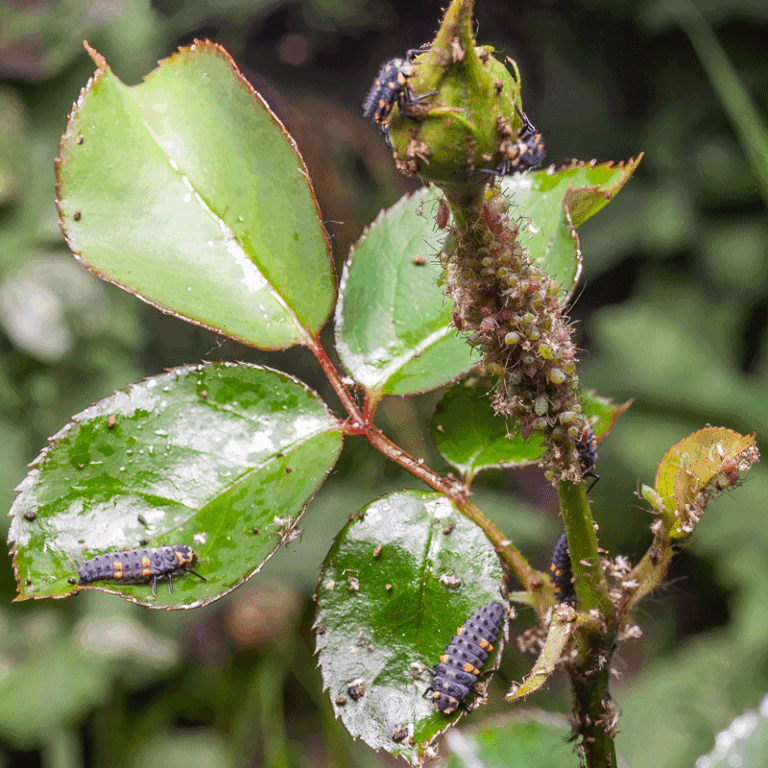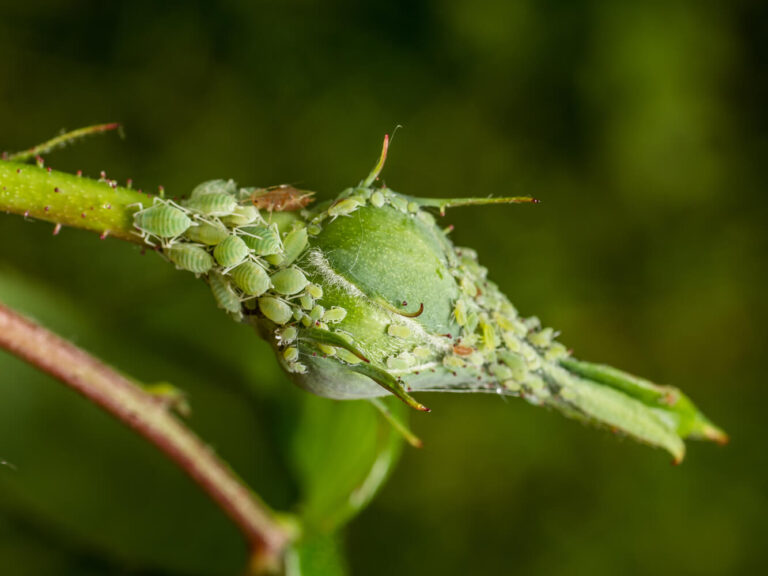
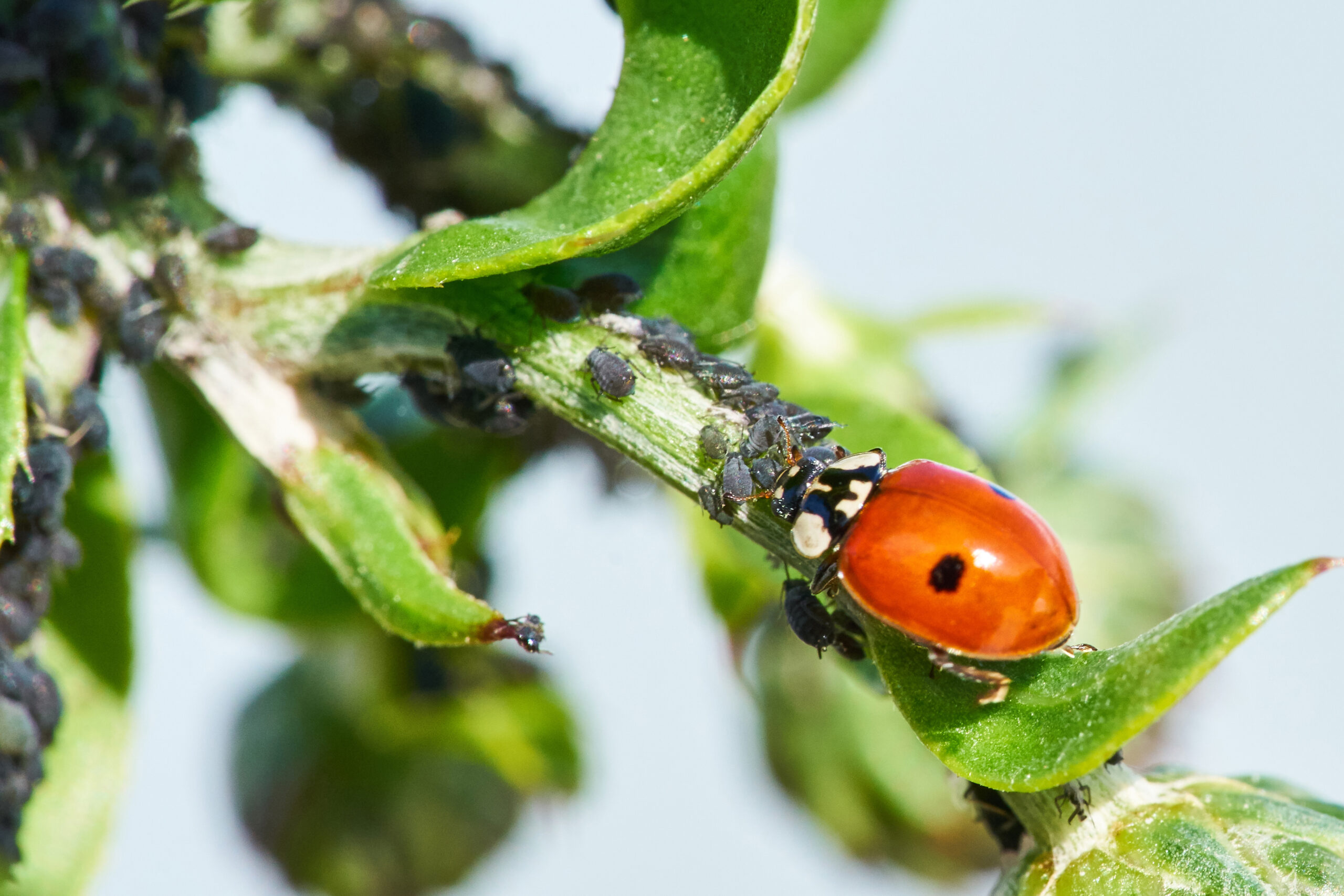
There are moments when you hesitate: a carpet of aphids on a young shoot, your hand already sliding towards the sprayer… Yet there is a gentler and often more sustainable approach: biological control of aphids, using their natural predators.
At Horpi, we breed theAdalia bipunctata (the two-spotted ladybug) to help gardeners, horticulturists, market gardeners and green space managers control aphids naturally, at the right time, without needlessly disrupting garden life.
Why ladybugs are effective against aphids
Effectiveness comes from one point: the larvae are real aphid devourers. A larva can consume up to 600 aphids over its entire cycle. An adult ladybug continues to feed and can reach up to 100 aphids a day under the right conditions.
The immediate action of the larvae is then accompanied by a natural succession by the adults, who continue the protection as they lay their eggs. The adult ladybug lays eggs regularly for about two weeks. Its eggs number in the hundreds.
Another advantage of ladybug larvae is that they work right at the heart of the outbreak, directly on the colonies. We’re not talking about “broad” spraying, but natural, targeted regulation… and very practical.
How long does it take to see results?
Biological control isn’t a switch: it’s a balance that resets itself. In practice:
- You’ll see a drop in infestation within a few days,
- and a return to a situation “under control” in 1 to 2 weeks, depending on the extent of the infestation and weather conditions.
If the pressure is very high, a second release can be useful: it’s not a failure, it’s an adaptation to the terrain.
Biological control vs. pesticides: the same objective, but a diametrically different approach
Pesticides may promise an immediate effect, but they can also affect other useful insects (pollinators, natural predators…), weakening the balance in the garden and sometimes encouraging aphids to return.
Biological aphid control aims to reduce the aphid population while letting other living things do their work. Important: ladybugs work on aphids. They don’t replace “all the pesticides in the garden”, but avoiding the use of pesticides against aphids is already a major gain.
Good to know: avoid introducing larvae or adult ladybugs within 3 weeks of an insecticide treatment, to preserve their effectiveness.
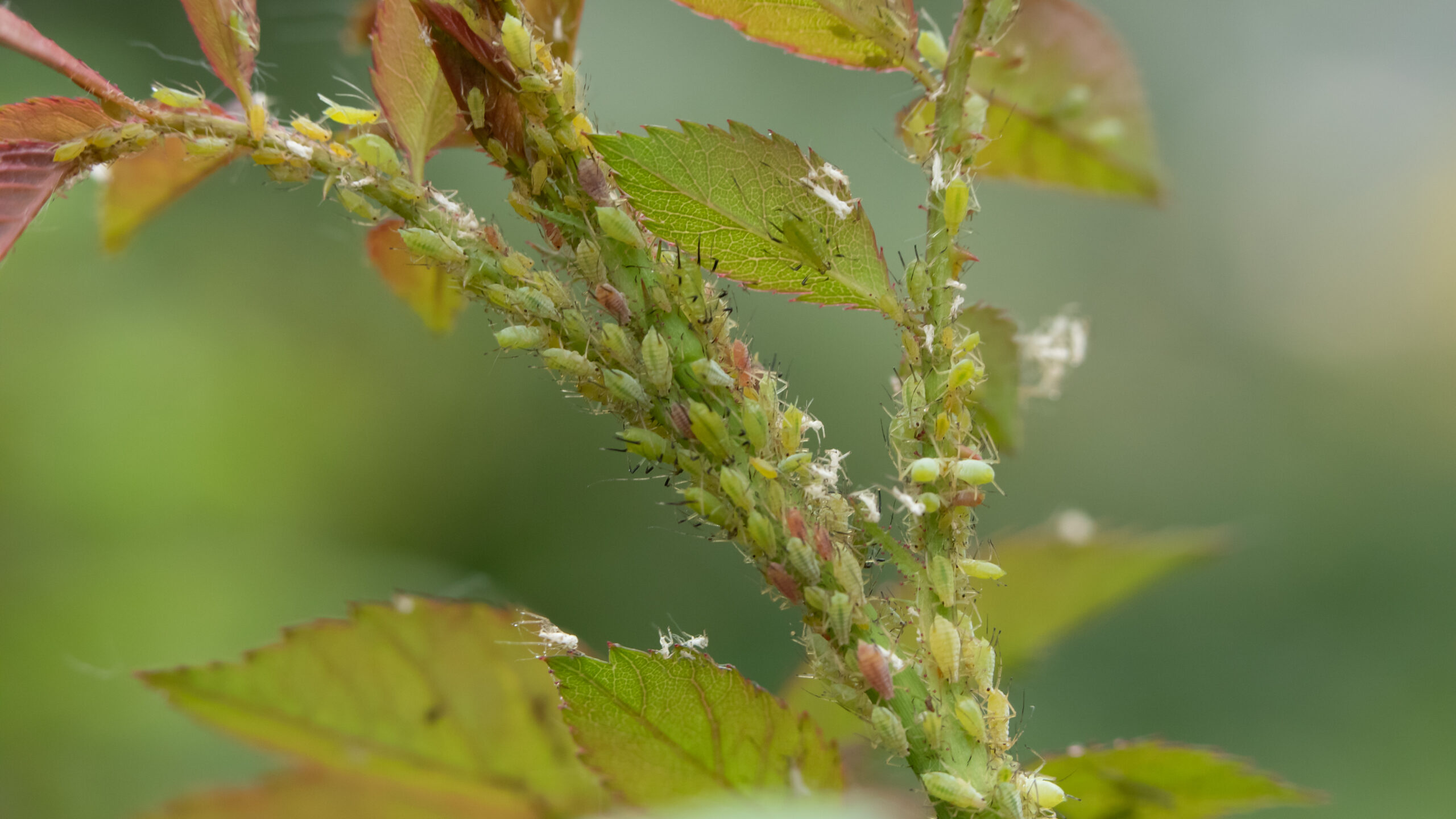
Gestures that really make a difference
Success is often in the details. Here are a few best practices to optimize the work of your ladybugs.
1) Control ants… which “breed” aphids
Ants love the honeydew secreted by aphids and, to guarantee their supply, they sometimes protect colonies. As a result, they can repel ladybugs and hinder natural regulation. Cut them off and you’ll be able to control them more easily.
- On trunks: install sticky strips (ideally at least 80 cm from the ground to avoid soiling).
- On roses/shrubs with multiple stems: you can limit the activity of ants at the base (by avoiding creating access “highways”).
- In densely populated areas: depending on the situation, suitable solutions exist to reduce nesting and displacement.
2) Introduce ladybugs at the right time (and in the right place)
To maximize efficiency :
- introduced at the end of the day,
- closer to home,
- with no wind or rain,
- never on recently treated plants.
On very large colonies, a jet of water before introduction can help reduce the mass of aphids and facilitate the work of the larvae.
How many larvae or ladybugs should you place on your plants?
There’s no need to “water” the whole garden, just target the affected areas.
In general, you can count on :
- 5 to 40 larvae per rose or small shrub,
- 100 to 500 larvae per trunk for large trees (lime, birch, maple, etc.),
- 20 to 50 larvae/m² in infested areas of the vegetable garden.
- And to combine immediate impact and dissemination in the garden, match 1 to 2 adults to 10 larvae: the larvae “clean up”, the adults lay eggs and swarm.
These benchmarks vary according to :
- the level of infestation,
- foliage density,
- the presence of ants,
- weather conditions.
Choosing biological control: natural doesn’t mean random
Opting for biocontrol doesn’t mean “letting things happen”. It means observing better and acting earlier:
- keep an eye on young shoots (where aphids first settle),
- avoid excess nitrogen (which makes sap more attractive),
- preserve beneficial insects (ladybugs, hoverflies, lacewings, etc.),
- accept that a few aphids may remain, as long as the plant doesn’t suffer.
This approach is both ecological and demanding: it requires a little reading of the garden, but is often very effective over time.
Why Horpi?
Horpi controls the entire chain: breeding, selection, packaging and logistics, with a constant focus on quality.
Today, Horpi produces millions of ladybugs every year, sells its solutions throughout Europe and continues to optimize its breeding processes, while developing and marketing simple, effective solutions tailored to the needs of the private, public and professional sectors.
TheAdalia bipunctata we breed is an endemic European species, chosen for its efficiency and ecologically-compatible integration.
A brief conclusion
Biological control of aphids is not a “green gadget”. It’s a practical solution, based on a natural predator, which often enables aphids to be controlled without pesticides.
With the right gestures (ant management, timing, placement) and simple dosage guidelines, you can protect your plants while keeping your garden alive – and that’s where regulation becomes most sustainable.