
Gardeners are well aware that aphids are one of the most dreaded scourges of the vegetable garden and flower beds. But what is less well known is that ants play a key role in their proliferation.
Indeed, these two insects form a surprising alliance that often jeopardizes plant health. Understanding this relationship and acting on the right lever – ants – is therefore essential for effective biological control in the garden.
The relationship between ants and aphids: a veritable “breeding” operation
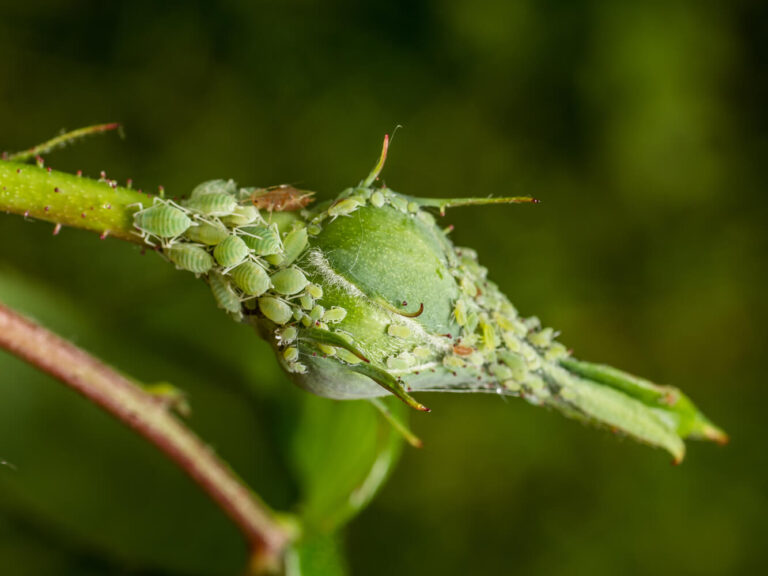
Aphids feed on plant sap, producing a sweet liquid called honeydew. For ants, this honeydew is a valuable source of energy.
Result: they actively protect aphids, like a shepherd protects his flock.
- They repel or attack natural predators (notably ladybugs).
- They sometimes move aphids from one stem to another to colonize a plant more quickly.
- They encourage aphid colonies to survive and reproduce, increasing their numbers and damage to plants.
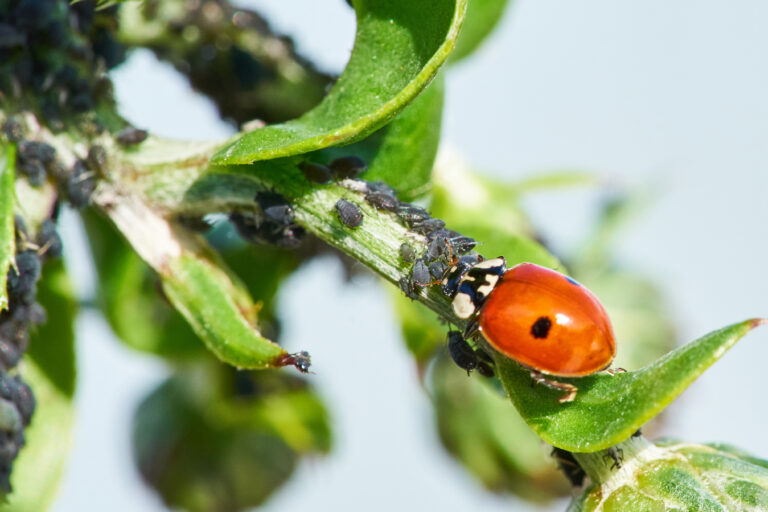
Without ants , ladybugs and other garden helpers can intervene naturally to control aphids. With them, the fight becomes much more complicated.
Why ant control is so important
Allowing ants to roam freely is like providing aphids with an army of guards. It prevents natural methods from working and weakens the whole garden ecosystem.
By acting directly on the ants, we create the ideal conditions for auxiliaries such as ladybugs (notablyAdalia bipunctata, an endemic species produced by Horpi) to do their work quickly and sustainably. Biological control is therefore based on a dual action: limiting ants’ access to plants and introducing or encouraging aphid predators.
How to recognize the presence of ants linked to aphids
A few simple observations can help identify this undesirable duo:
- Incessant comings and goings of ants along the stems and up to the young shoots.
- Sticky leaves covered in honeydew.
- Small black spots, indicating the presence of fumagine (a fungus that blocks photosynthesis).
- A particularly thriving aphid colony despite the presence of beneficial insects.
If you observe these signs, there’s no need to treat aphids alone: the key is to control ants too.
Practical tips for limiting ants in the garden
Depending on the type of plant, there are several natural methods to prevent ants from protecting aphids:
1. On trees and shrubs
- Place strips of glue around the trunk, about 80 cm from the ground, to block the ascent of ants.
- Check their effectiveness regularly, as dust or moisture can reduce their stickiness.
2. In flower beds or vegetable gardens
- Diatomaceous earth: sprinkle around the feet of plants. This natural mineral creates a physical barrier against ants.
- Regular application: repeat after rain or watering.
3. Directly into the ground
- Specific nematodes: these micro-organisms parasitize ants in their nest, reducing their population over the long term.
- Durable solution: particularly useful in vegetable gardens or greenhouses.
The winning combination: control ants + introduce ladybugs
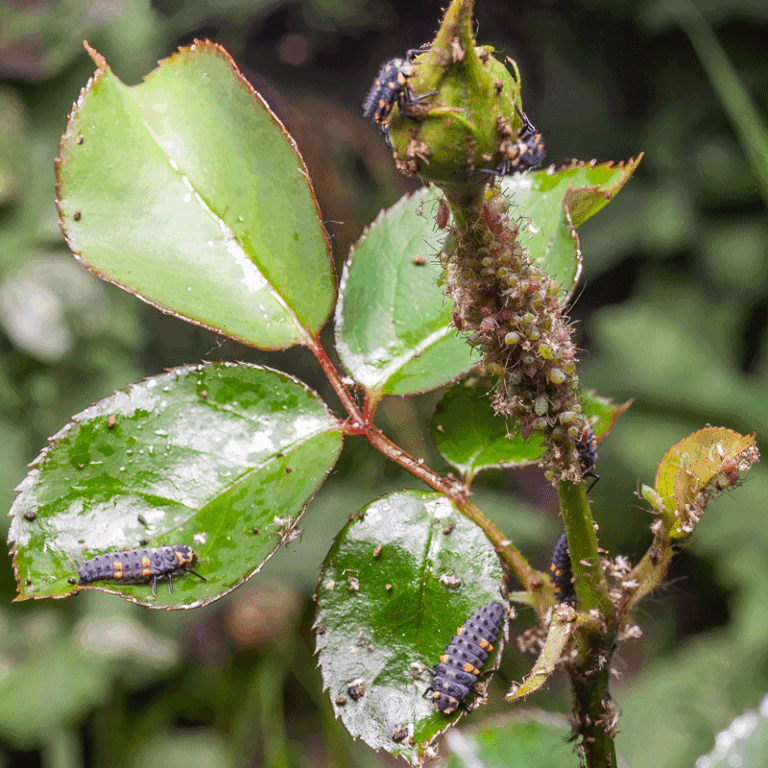
Once the ants have been kept at bay, the beneficials regain their full effectiveness. Ladybugs, and their larvae in particular, are capable of devouring up to 600 aphids during their life cycle.
The ladybug Adalia bipinctata is particularly suitable: a European species, highly voracious, effective against more than 50 aphid species, suitable for gardens, green spaces and ornamental, vegetable and fruit crops.
Introducing ladybugs at the right time means that infested plants can be cleaned up quickly, before colonies become too large.
For optimum results:
- Take action as soon as you see the first aphids.
- Avoid chemical treatments, which will also harm beneficials.
- Combine prevention (ant control) with the introduction of beneficials.
The role of ants in garden balance
It’s not a question of eliminating all ants from the garden, as they also play a positive role in aerating the soil and recycling organic matter. The aim is to limit their specific action against aphids. It’s by striking this balance that we protect both plant health and overall biodiversity.
Towards sustainable biological control
In short, controlling ants is the first essential step in limiting aphids without resorting to pesticides. Once this barrier has been removed, natural beneficials, in particular ladybugs and their larvae, can act effectively.
The approach is part of a broader vision: that of a living, resilient garden that respects biodiversity. This is exactly the approach that Horpi advocates: to offer a 100% natural solution and method for effectively – and effortlessly – combating aphids.