
Adalia bipunctata larvae
Raised in our controlled-atmosphere rearing rooms, Adalia bipunctata ladybug larvae are renowned for their exceptional effectiveness against aphids.
They remain on the plants into which they have been introduced, rapidly controlling aphid colonies.
Their efficacy on a large number of aphid species makes them a versatile control solution, effective in gardens and green spaces as well as in market gardening, arboriculture and ornamental crops, in greenhouses, tunnels or open fields.

A single larva eats up to 600 aphids during its cycle
Proven effectiveness
The benefits of larvae
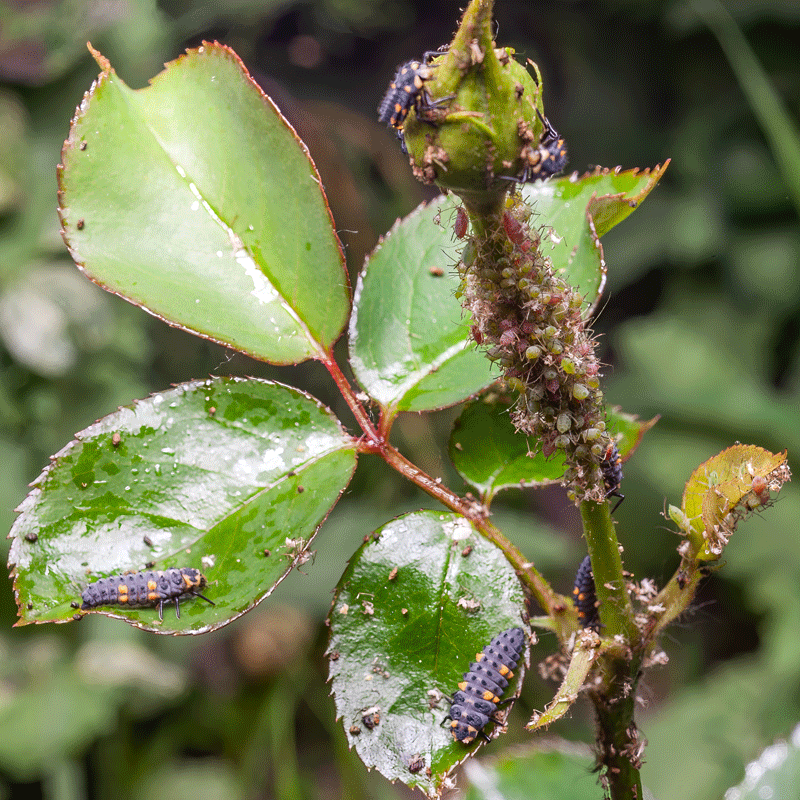
Very voracious as soon as they are established: a single larva can consume up to 600 aphids during its development.
Wingless: stay where you put them.
Active on aphid outbreaks: quickly cleanse infested plants
Active from spring in many regions.
Adalia bipunctata is the European ladybug. It is an integral part of the ecosystem, playing its role without disturbing the environment.

Product sheet
Packaging
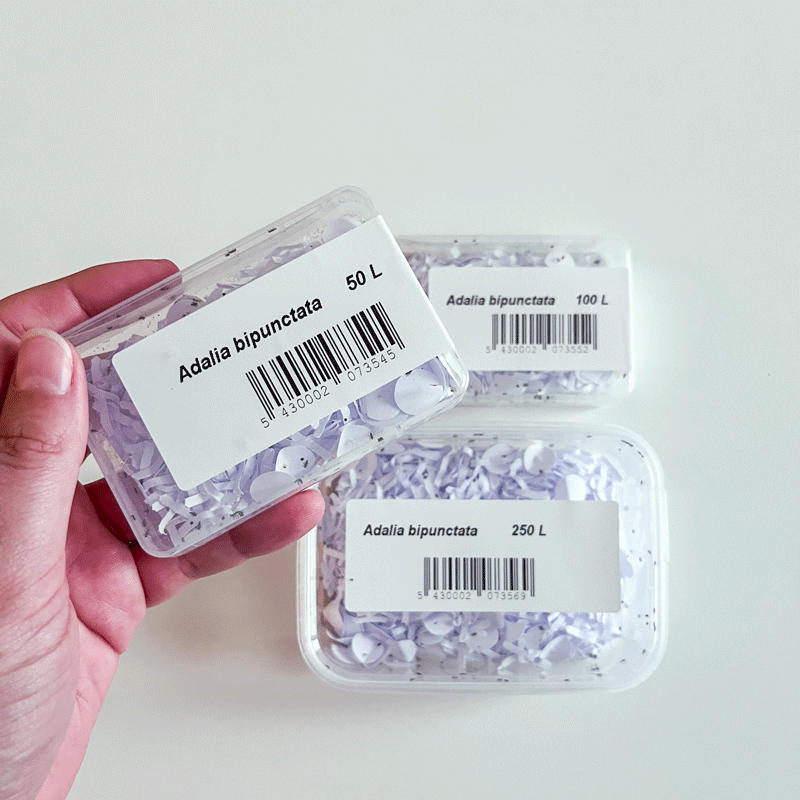
Our Adalia bipunctata larvae are carefully packaged to arrive at your home in top condition. Three sizes are available, depending on the size of the area to be treated.

50
larvae
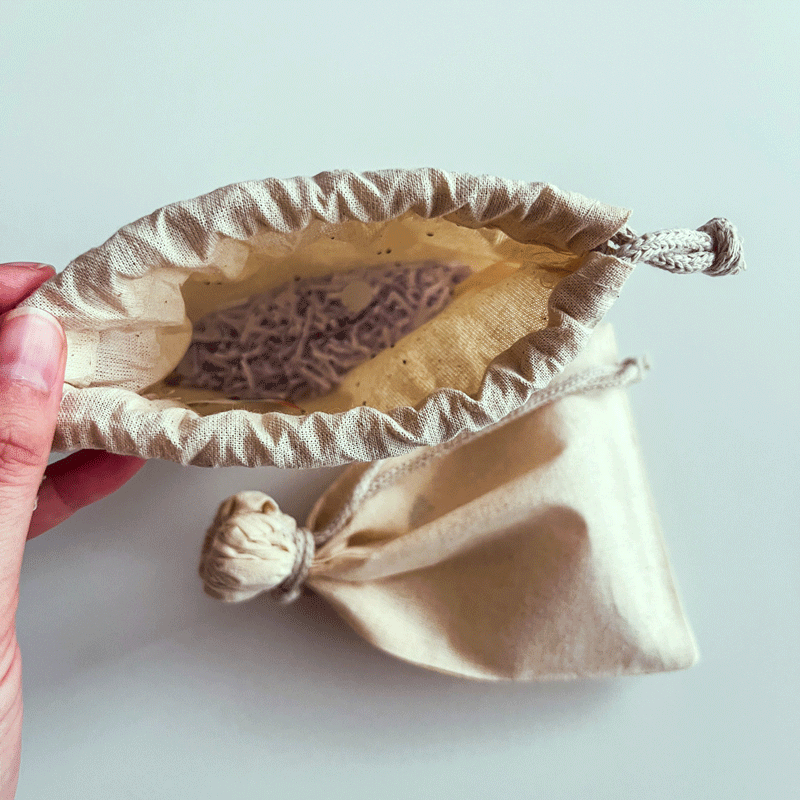
Cotton box or bag
100
larvae
Cotton box or bag
250
larvae
Cotton box or bag

Food included
Natural substrate
Illustrated operating instructions

The cotton bag is ideal for releasing larvae into a tree. The canister allows more precise distribution over infested areas.

Breeding kit
A fun, educational tool for observing the metamorphosis from larva to adult.
How much for your situation?
The number of larvae to be introduced depends on the type of plant and the extent of the infestation. Here are our recommendations for effective treatment.

For your shrubs
Roses, hedges, ornamental plants
larvae

For your trees
Fruit trees, lime trees, maples...
larvae

For your cultivated areas
Vegetable garden, flower beds, greenhouses
larvae/sq.m
If in doubt, start with the low dosage and observe for 2 weeks. A ladybug larva can devour up to 100 aphids a day!
Our commitment to quality
At Horpi, we make no compromises when it comes to the quality of our beneficials. Each shipment is prepared to guarantee the effectiveness of your biological control.

Timely shipments
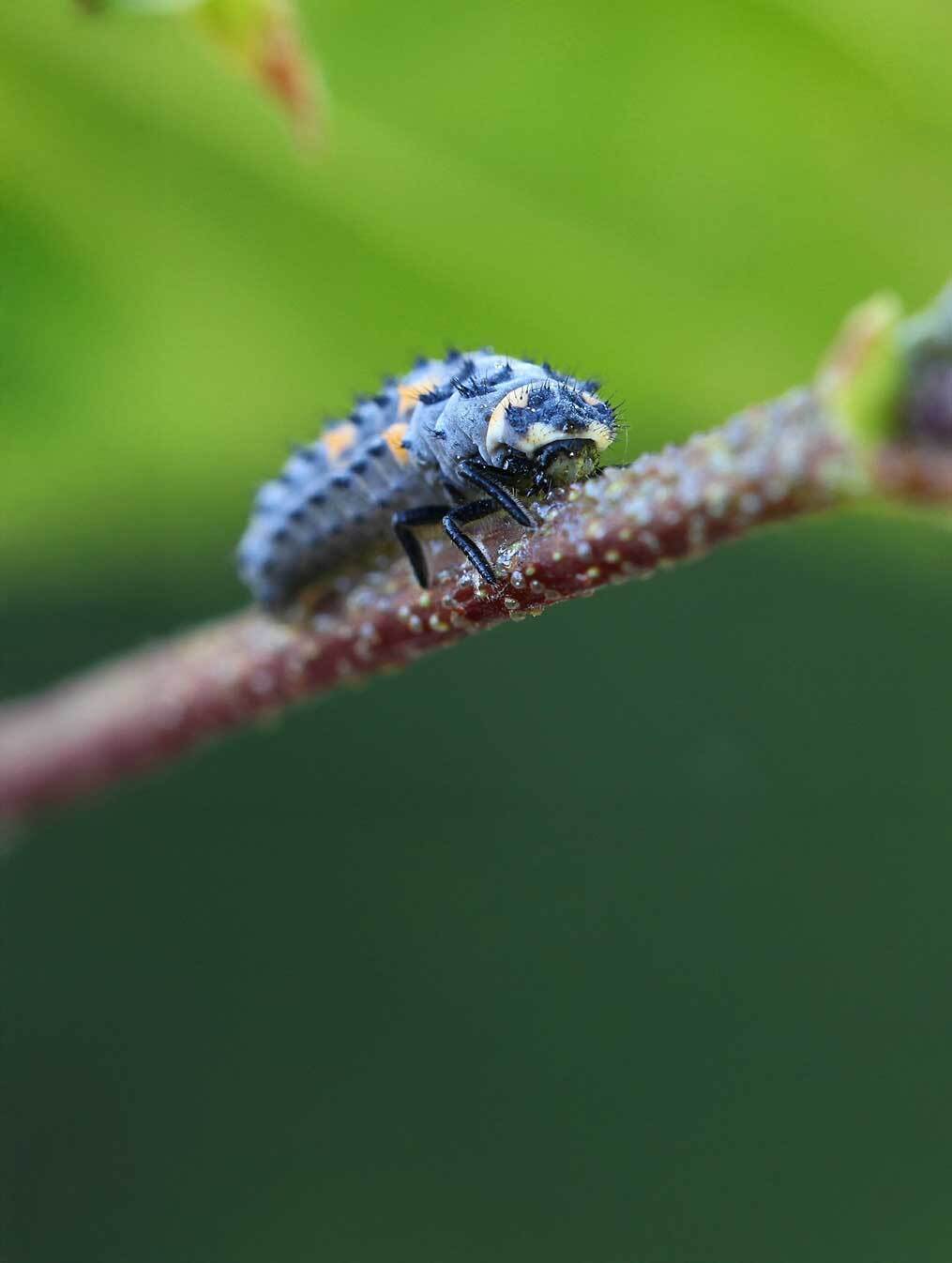
Larvae shipped young to reach their most voracious stage during transport.
On reception, they may appear small: this is a sign that they are ready to hunt.

Always more in your box
30 to 40% more larvae in each package to guarantee the quantity announced at the time of release.

Continuous quality control
Predatory efficiency, vitality and transport capacity tested before each shipment. Only fully operational larvae are shipped.

Packaging
Our Adalia bipunctata larvae are carefully packaged to arrive at your home in top condition. Three sizes are available, depending on the size of the area to be treated.
50
larvae
Cotton box or bag
100
larvae
Cotton box or bag
250
larvae
Cotton box or bag
Food included
Natural substrate
Illustrated operating instructions
The cotton bag is ideal for releasing larvae into a tree. The canister allows more precise distribution over infested areas.
Breeding kit
A fun, educational tool for observing the metamorphosis from larva to adult.
How much for your situation?
The number of larvae to be introduced depends on the type of plant and the extent of the infestation. Here are our recommendations for effective treatment.
For your shrubs
Roses, hedges, ornamental plants
larvae
For your trees
Fruit trees, lime trees, maples...
larvae
For your cultivated areas
Vegetable garden, flower beds, greenhouses
larvae/sq.m
If in doubt, start with the low dosage and observe for 2 weeks. A ladybug larva can devour up to 100 aphids a day!
Our commitment to quality
At Horpi, we make no compromises when it comes to the quality of our beneficials. Each shipment is prepared to guarantee the effectiveness of your biological control.
Timely shipments
Larvae shipped young to reach their most voracious stage during transport.
On reception, they may appear small: this is a sign that they are ready to hunt.
Always more in your box
30 to 40% more larvae in each package to guarantee the quantity announced at the time of release.
Continuous quality control
Predatory efficiency, vitality and transport capacity tested before each shipment. Only fully operational larvae are shipped.
How to use larvae against aphids?

Pre-release preparation
For a good ladybird action:
- Be sure of the presence of aphids.
- Avoid all pesticide treatments for 3 weeks prior to release.
- Limit the number of ants on your plants.

Storage
Our recommendations for keeping ladybugs:
- Keep them cold, dark and draught-free (in the fridge or in cold storage at 5 or 6°C).
- Even in this situation, do not keep them for more than 3 days.

The release
A successful release guarantees good results:
- Release ladybugs at the end of the day or on overcast days.
- Introduce them directly onto attacked plants.
- Avoid treating plants with pesticides for the next 3 weeks.

Follow-up
Check that the ladybug larvae are working properly:
- Keep a close eye on aphid colonies and the general condition of the plant.
- You'll know that the number of larvae is sufficient if, after 1 to 2 weeks, the aphid colonies fade and the plant regains vigor.
where to buy our larvae?
Find your nearest dealer in just one click!
Horpi relies on a network of partner retailers specialized in biological control.
Your questions
Can larvae be released before aphids appear (preventive control)?
As with adults, this is not advisable. Larvae have very limited autonomy without food. For best results, wait until you see the first aphid colonies before releasing the larvae.
Will the larvae leave the treated plant?
In general, no. Being apterous (wingless) and finding their food locally, they have no reason to migrate as long as aphids are available. They will remain sedentary until their final transformation.
Will the adults from the larvae remain in the garden or in the crop?
The loyalty of new adults will depend on the continuity of food resources. If there are aphids left, or if your garden offers melliferous flowers (a source of pollen and nectar for the adults), they will be much more inclined to stay in your ecosystem.
Will the adults from the larvae return the following year?
That's what ecological management is all about! If you maintain a diversified environment (native hedges, "laissez-faire" areas, insect shelters), the adults will be able to hibernate on site, forming the first line of natural defense the following spring.
Should larvae be released every year?
It all depends on the balance of your garden. In a very unbalanced environment, or for sensitive crops undergoing massive annual attacks, a "support" release each spring can compensate for the absence of natural predators and rapidly stabilize the situation.
Can adults be introduced at the same time as larvae?
This is an excellent practice, particularly recommended for heavy infestations. In this way, you combine the immediate action of cleaning out larvae with the potential for reproduction and colonization of adults.
Can larvae be introduced when infestation is high?
Yes, but some pre-preparation is useful. If there are too many aphids, the larvae risk being overwhelmed and not being able to control the populations effectively. Cleansing the aphids (with a jet of water or an approved biological product) before release allows the larvae to regain the upper hand over the aphids. For more practical advice, visit our resources.