
Adults Adalia bipunctata
Adalia bipunctata ladybug adults are ready to use for natural aphid control.
Mobile and durable, they move from plant to plant, consuming aphids and laying eggs close to colonies, contributing to long-lasting protection over a large area.

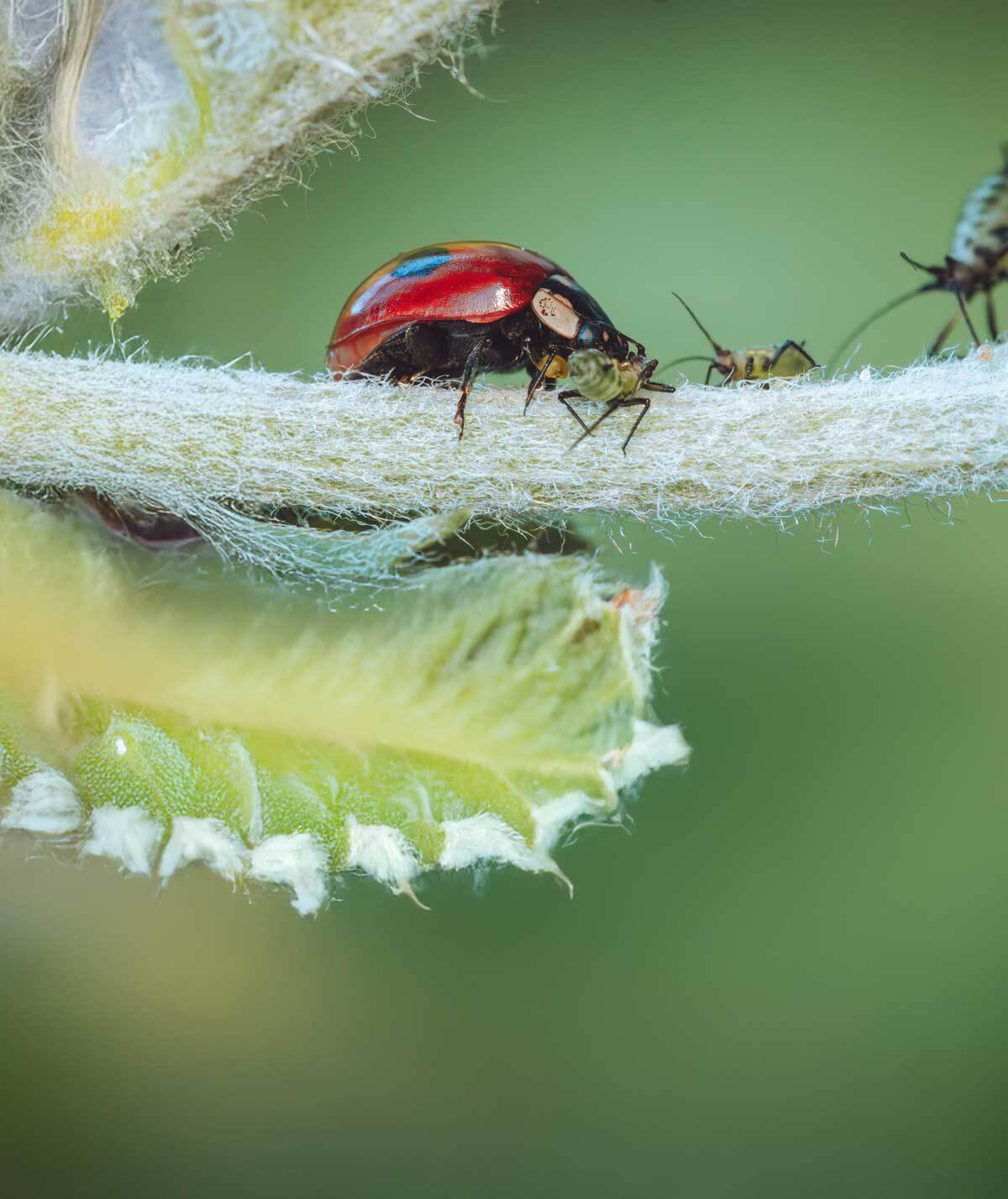
An adult eats up to 100 aphids a day
Proven effectiveness
The advantages of adults
Highly mobile: moving from one plant to another, they cover the entire infested area in search of aphids to feed on.
Lay eggs on infested plants: larvae from the eggs ensure prolonged control,
Live for several weeks: they have a long-term effect on the development of aphid populations
Robust: they can be released in all weather conditions.
Adalia bipunctata is the European ladybug. It is an integral part of the ecosystem, playing its role without disturbing the environment.

Product sheet
Packaging
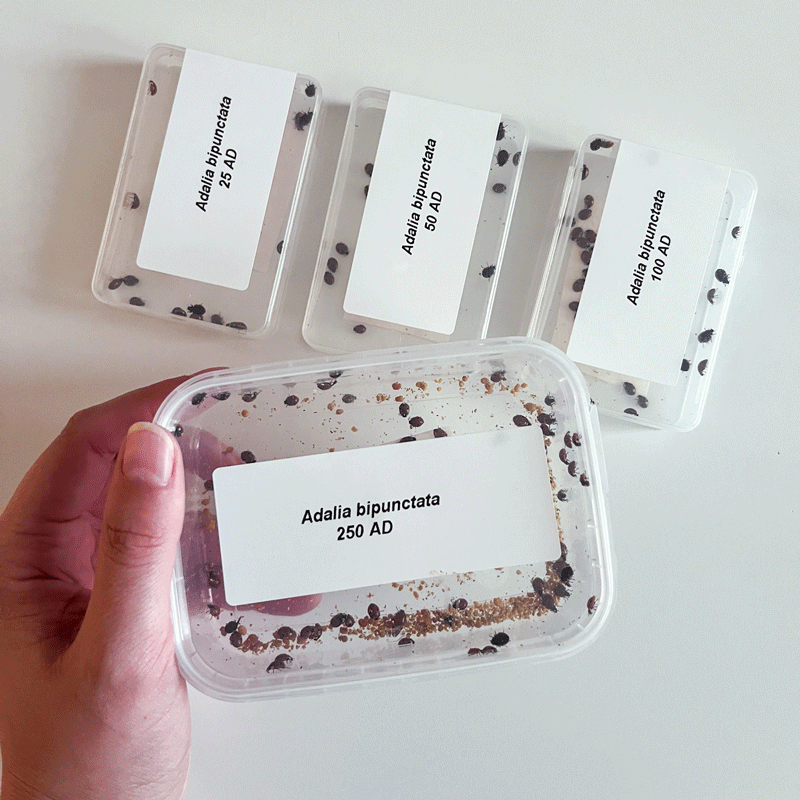
Our Adalia bipunctata adult ladybugs are shipped ready for action. Choose the right size for your surface.

25
ladybugs
50
ladybugs
100
ladybugs
250
ladybugs

Food included
Hydration tabs
Illustrated operating instructions
How much for your situation?
Dosage depends on the intensity of the infestation and the stage of development of the aphids. Adults are particularly effective in combination with larvae.

The ideal ratio
Larvae + adults
Count 1 to 2 adult ladybugs per 10 larvae.
adults
for 10
larvae

Our commitment to quality
At Horpi, we select adults at the peak of their effectiveness to guarantee the success of your biological control.

Assets upon receipt
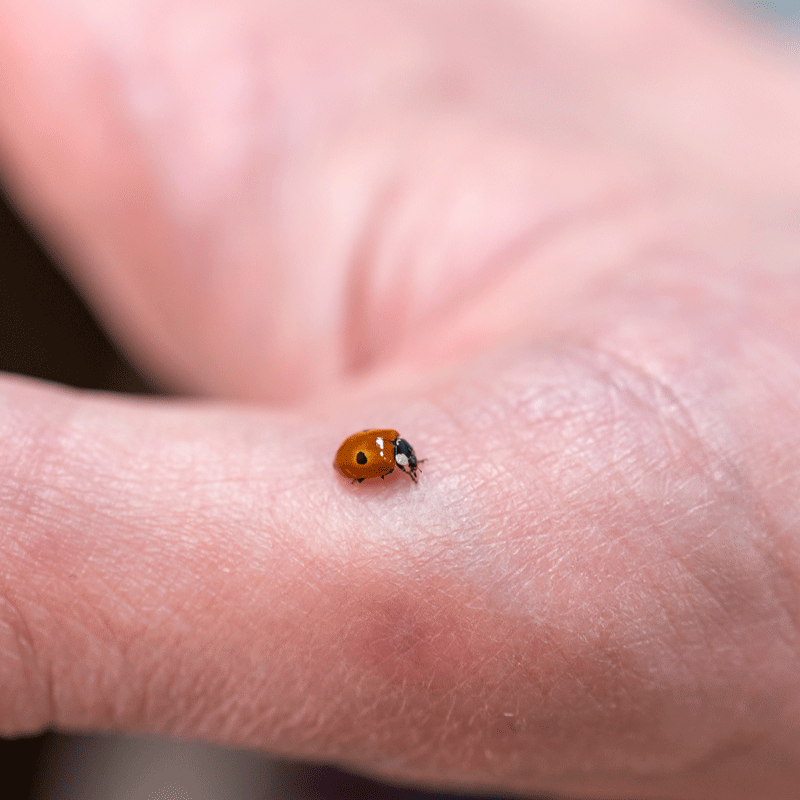
Our adults are delivered fully active and ready to consume aphids for several weeks.

At the height of the egg-laying season
Able to lay numerous eggs which will give rise to new predatory larvae to prolong the action over time.

Continuous quality control
Efficiency and fertility of adults permanently checked before each shipment.

Packaging
Our Adalia bipunctata adult ladybugs are shipped ready for action. Choose the right size for your surface.
25
ladybugs
50
ladybugs
100
ladybugs
250
ladybugs
Food included
Hydration tabs
Illustrated operating instructions
How much for your situation?
Dosage depends on the intensity of the infestation and the stage of development of the aphids. Adults are particularly effective in combination with larvae.
The ideal ratio
Larvae + adults
Count 1 to 2 adult ladybugs per 10 larvae.
adults
for 10
larvae
Our commitment to quality
At Horpi, we select adults at the peak of their effectiveness to guarantee the success of your biological control.
Assets upon receipt
Our adults are delivered fully active and ready to consume aphids for several weeks.
At the height of the egg-laying season
Able to lay numerous eggs which will give rise to new predatory larvae to prolong the action over time.
Continuous quality control
Efficiency and fertility of adults permanently checked before each shipment.
The guide
How to use ladybirds against aphids?

Pre-release preparation
For a good ladybird action:
- Be sure of the presence of aphids.
- Use ladybugs in combination with larvae, if aphid attack is well established.
- Avoid all pesticide treatments for 3 weeks prior to release.
- Limit the number of ants on your plants.

Storage
Our recommendations for keeping ladybugs:
- Keep them cold, dark and draught-free (in the fridge or in cold storage at 5 or 6°C).
- Even in this situation, do not keep them for more than 3 days.

The release
A successful release guarantees good results:
- Release ladybugs at the end of the day or on overcast days.
- Introduce them directly onto attacked plants.
- Avoid treating plants with pesticides for the next 3 weeks.

Follow-up
Their work can last all season long if you follow these tips:
- Keep a close eye on aphid colonies and the general condition of the plant.
- Continue to stop the progression of aphid-defending ants (with strips of glue on the stems, for example).
where to buy our adult ladybugs?
Find your nearest dealer in just one click!
Horpi relies on a network of partner retailers specialized in biological control.
Your questions
Is the adult ladybug Adalia bipunctata always red with 2 black spots?
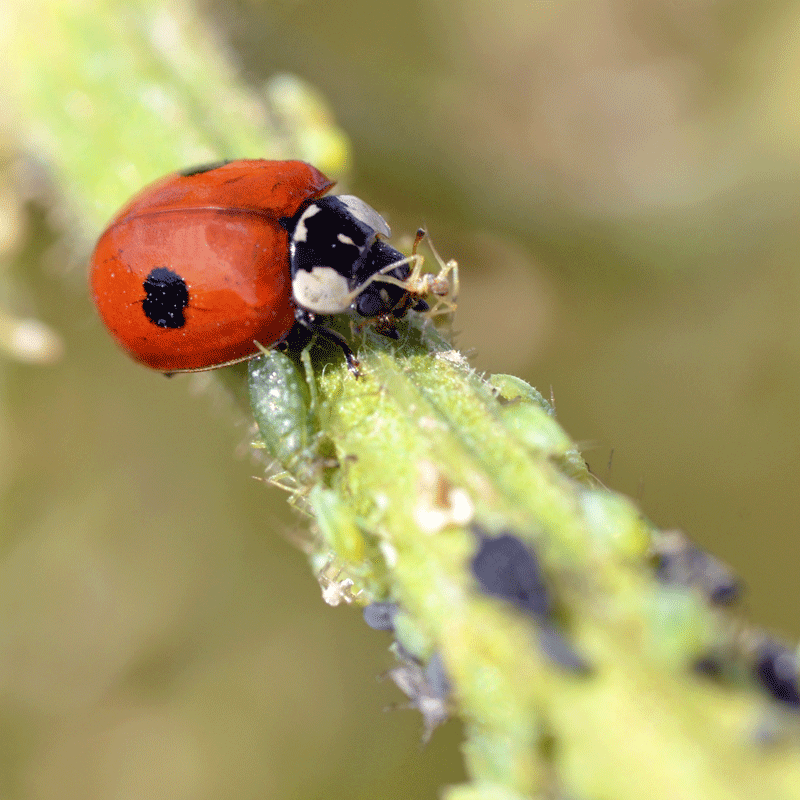
No, this species is highly polymorphic. While the two-spotted red form is the most famous, black individuals with red spots (melanistic forms) or orange individuals are also common. This aesthetic variability in no way alters their predatory efficiency.
How do you recognize the ladybug Adalia bipunctata?
The most reliable identification criterion is the pronotum (the part between the head and the elytra). It is always black with two distinct white lateral spots. This anatomical detail makes it impossible to confuse it with other species, whatever the color of its back.
Does the ladybug Adalia bipunctata fly?
Yes, absolutely. It's an insect with wings (protected under its elytra) and excellent flying skills. This ability is essential in nature: it enables it to move from plant to plant, covering significant distances to locate new aphid colonies as soon as its current food source runs out.
Can adults leave the area where they've been released?
This is a possibility if food is in short supply. However, if your plants are sufficiently infested with aphids, the adults will stay to feed and, above all, to lay their eggs, thus ensuring larval succession on your site.
Is it preferable to release adults in crops under cover?
Under cover (greenhouse or veranda), management is tricky, as adults can be attracted by light walls and become exhausted. For targeted efficacy on specific indoor targets, the use of larvae is often preferred. Adults are recommended for prolonged control in large greenhouse complexes.
Do ladybugs have enough air in their packaging?
Yes, our packaging boxes allow for air renewal. Their metabolism during transport remains low, limiting their oxygen consumption and ensuring their arrival in perfect health.