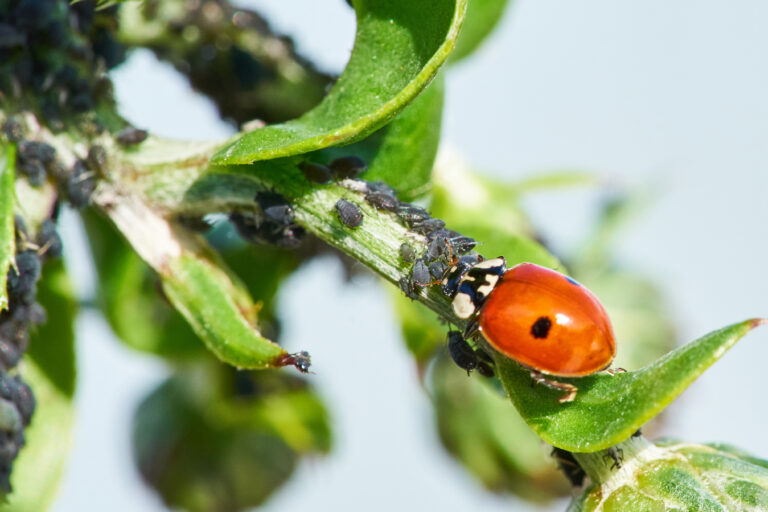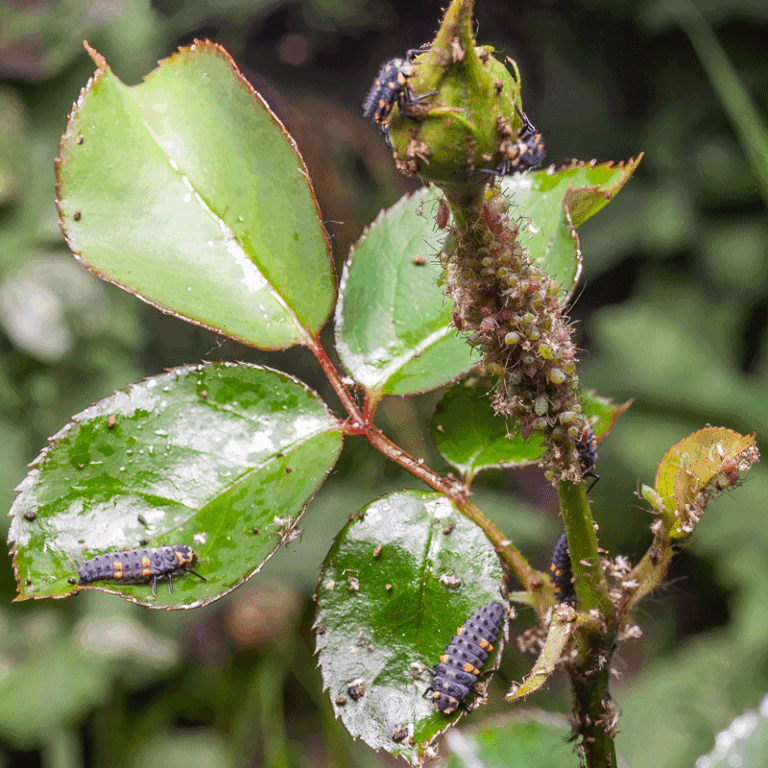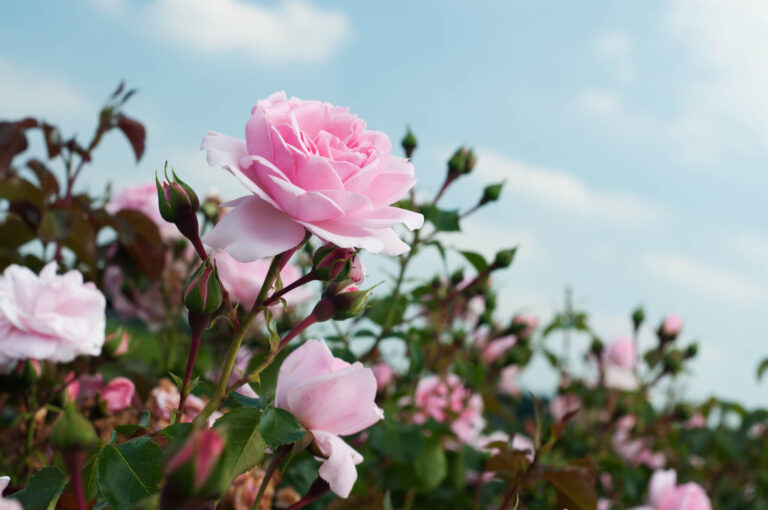
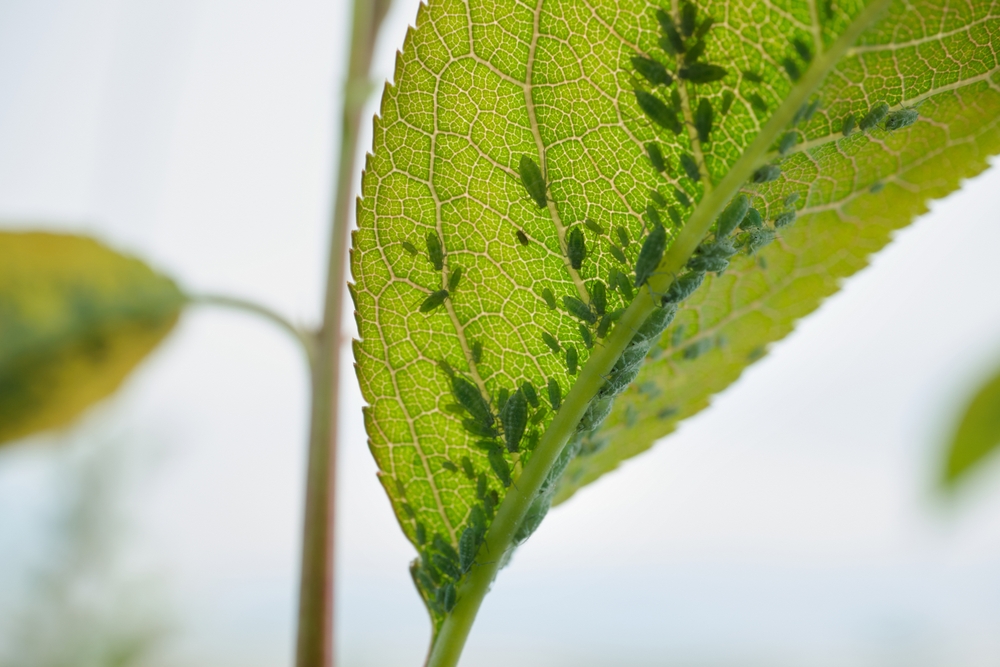
In the middle of summer, the heat sometimes slows down aphids… but not everywhere. In shaded, well-watered areas (repeat-blooming roses, patio planters, watered vegetable gardens), significant infestations persist, sustained by honeydew and ants.
The result: sticky leaves, sooty mold, and stunted growth. The good news is that a 20-minute weekly routine is often enough to prevent a second local outbreak and maintain the effectiveness of beneficial insects. Here is the Horpi strategy—simple, sustainable, and 100% pesticide-free—for biological control of aphids.
Why Fires Persist in the Summer
Extreme heat can reduce certain populations, but the microclimates created by regular watering, shade, and very tender shoots remain ideal for the colonies.
The honeydew secreted by aphids attracts ants, which protect the colonies from predators (ladybugs, hoverflies, and lacewings). The ant-aphid partnership therefore perpetuates the problem. The proof: if you notice sticky leaves, sooty mold, and ants moving back and forth on the stems, you have an active infestation.
The “20-Minute” Weekly Routine
Goal: Break the “honeydew > ants > aphid protection” cycle, while preserving your beneficial insects. Best done at the end of the day, when there is no strong wind or extreme heat.
1) Targeted inspection (5 min)
Check your high-risk areas: underneath leaves, at the tips of stems, on your container plants, rose bushes, fava beans, cucumbers, and young fruit trees. Look for dense colonies, curled leaves, shiny honeydew, and the presence of ants.
2) “Stuttering” water jet (5–7 min)
Using a strong but controlled spray, remove visible colonies (especially on roses and fava beans). It works immediately, is non-toxic, and removes honeydew. Follow up with minimal sanitary pruning: remove 2–3 heavily infested tips to alleviate much of the pressure.
3) Disrupt the ants’ logistics (5 min)
- Glue bands on tree trunks (fruit trees, standard roses): Check that they are still adhering.
- Apply diatomaceous earth at the base of plants in flower beds; reapply after rain or watering.
- Support and tie-back hygiene: Clean off the honeydew to prevent “traffic jams.”
Without ants, your beneficial insects will regain their foothold, and biological control will accelerate.
4) Targeted short releases (3–5 min)
In persistent infestations, release ladybug larvae as close as possible to the colonies (at dusk, when the weather is calm). The larvae will remain in place and feed voraciously. For larger areas, add a few adults to encourage them to swarm.
Adjust the amount based on the type of plant and the size of the area. It’s better to apply small amounts repeatedly than to apply a large amount all at once!
Watering Tips for Summer
Watering promotes the growth of very tender foliage, which aphids love. The goal is not to “deprive” the plants, but to limit excesses:
- Be sure to water in the morning rather than in the evening to avoid prolonged moisture at night.
- Avoid applying nitrogen fertilizer in the middle of summer: it causes the shoots to become overly tender.
- Use mulch to help maintain moisture levels and reduce water stress (fewer “juicy” regrowths).
Micro-releases: Where, when, and how many?
- Where: directly on the infested plant, as close as possible to the infested areas (terminal shoots, undersides of leaves).
- When: Late in the day or on a very calm morning, excluding heat waves, rain, and wind.
- How much: Calculate per plant or per square meter. In the summer, it’s best to treat small areas and repeat the treatment after 7–10 days if necessary.
- Before releasing the plants: Rinse them with a water jet, then let them dry for 30–60 minutes. Avoid using any insecticides 3 weeks before, during, and after release to avoid harming beneficial insects.
Common Mistakes to Avoid
- Overwatering and late nitrogen application: a dangerous combination for “summer aphids.”
- “Convenience” chemical sprays: They also kill ladybugs and disrupt the dynamics of biological control.
- Forget about the ants: as long as the ants keep coming, your beneficial insects are at a disadvantage.
- Releasing in direct sunlight or wind: reduced effectiveness, unnecessary scattering.
Signs That the Routine Is Working
Within 7–14 days, you should notice:
- Less honeydew and fewer ants; leaves are less sticky.
- Fragmented colonies instead of compact patches.
- Appearance of natural enemies (ladybug larvae, hoverfly larvae).
If an aphid infestation persists (in a dense hedge or on very vigorous rose bushes), repeat the small-scale release and reinforce the ant barriers. Consistency pays off: it’s the key to a resilient, pesticide-free garden.
Preparing for the Transition to September
In late August, prepare for a possible “second wave” as school starts: check the condition of the sticky traps, reapply diatomaceous earth, and schedule weekly inspections until the first cool nights arrive. By keeping up the pressure now, you’ll prevent sooty mold and damage to your roses, fruit trees, and hedges in September.
As you can see, in the summer, aphid colonies thrive where heat and irrigation create a cool haven. A 20-minute weekly routine (inspection, hosing down, checking for ants, releasing small numbers of beneficial insects) is often enough to prevent a second local outbreak and maintain the effectiveness of your beneficial insects.
This simple and natural approach is in line with Horpi’s philosophy.